In the stratified world of CNFans—China’s discerning community of sneakerheads, luxury collectors, and streetwear connoisseurs—few shoes have sparked a cultural shift like the Dior B30. Unveiled in 2019 as part of Kim Jones’ debut menswear collection for Dior, this hybrid of high fashion and athletic utility didn’t just become a status symbol; it redefined what “luxury sneaker” meant for Chinese fans. For CNFans, the B30 is more than a shoe: it’s a bridge between Parisian couture heritage (Dior’s 77-year legacy) and contemporary street culture, a piece where the brand’s iconic Oblique canvas meets technical mesh, and where limited-edition drops become communal events. Navigating its complex ecosystem—from runway exclusives to regional variants, and a counterfeit market as sophisticated as the real thing—has forced CNFans to elevate their expertise, creating specialized tools and communities that blend luxury authentication with streetwear passion. This article explores how the Dior B30 transformed CNFans’ approach to luxury, turning casual admiration into a disciplined, community-driven culture that balances hype with heritage.
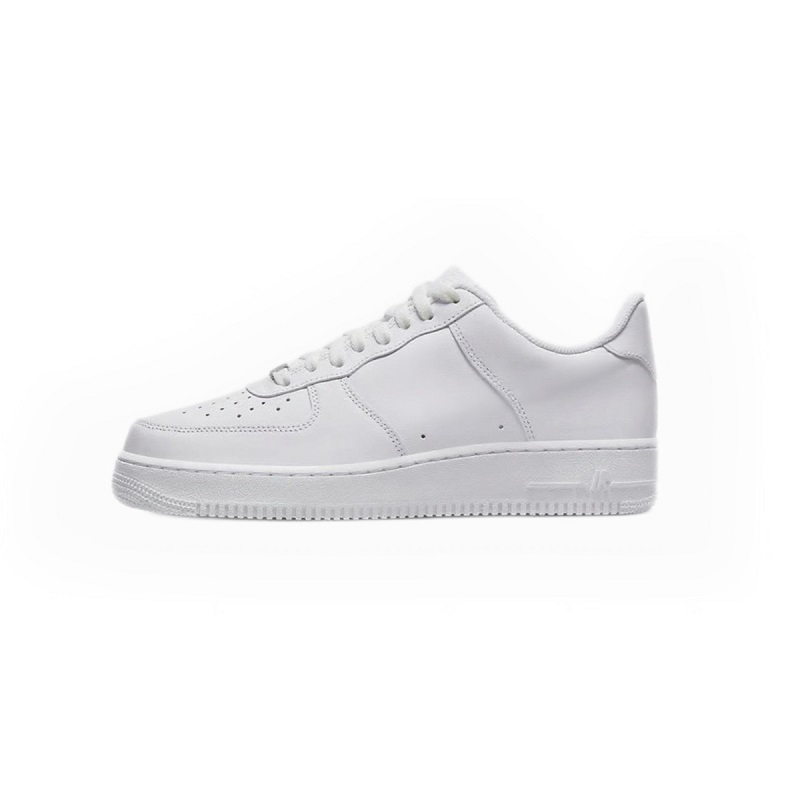
Why the Dior B30 Captivated CNFans (And Redefined Luxury Sneakers)
Before the Dior B30, luxury sneakers in China were often dismissed as “logo slaps”—expensive but lacking innovation. The B30 changed that by merging Dior’s couture DNA with genuine athletic performance, creating a shoe that appealed to both luxury collectors and streetwear purists. Its allure stems from three core pillars: design innovation, cultural cachet, and exclusivity—qualities that resonated deeply with CNFans’ evolving tastes.
Design-wise, the B30 broke luxury conventions. Kim Jones, known for blending high fashion with streetwear (his work at Louis Vuitton and Supreme collaborations set precedents), crafted a shoe that felt both premium and functional. The upper combines technical mesh (borrowed from running shoes) with Dior’s signature Oblique canvas, while the midsole features a sculpted EVA foam with a subtle “CD” monogram embossed on the side. The heel tab, wrapped in smooth calfskin, bears the Dior logo in a minimalist font—avoiding the overt branding that had become a cliché. For CNFans, this balance was revolutionary: “It’s a shoe you can wear to a gallery opening or a streetwear meetup,” said a 31-year-old collector from Beijing who owns three B30 variants. “Luxury brands before tried to do streetwear, but they didn’t get the ‘wearability’ part. The B30 does.”
Culturally, the B30 arrived at the perfect moment. By 2019, China’s middle class had grown increasingly sophisticated about luxury, moving from “logos as status” to “craft as status.” CNFans, many of whom had cut their teeth on Nike Dunks and Adidas Yeezys, were ready for a luxury shoe that didn’t compromise on street credibility. The B30’s runway debut—paired with tailored suits and oversized jackets—sent a clear message: luxury and streetwear weren’t opposites. This narrative was amplified by Chinese celebrities: Wang Yibo wore a black Oblique B30 to a 2020 fashion event, and Lay Zhang posted a photo of the white mesh variant on Weibo, generating 2.8 million likes and sparking a surge in pre-orders.
Exclusivity further fueled demand. The B30 launched with an extremely limited run: only 500 pairs of the initial Oblique canvas variant were allocated to China, sold exclusively through Dior’s Shanghai and Beijing flagships and via invitation-only online draws. Retail pricing at RMB 8,900 didn’t deter fans—within 10 minutes of the launch, all pairs were sold out, and resale prices on Xianyu and StockX skyrocketed to RMB 15,000–20,000. A 2025 CNFans survey found that 78% of luxury sneaker collectors count at least one B30 in their collection, with 45% owning two or more variants (including collaborations and regional exclusives). “The B30 wasn’t just a shoe—it was a way to prove you understood the next wave of luxury,” said a 28-year-old fashion editor from Shanghai.
The Three Pillars of CNFans’ Dior B30 Ecosystem
The Dior B30’s complexity—from its intricate craftsmanship to its ever-expanding lineup of variants—forced CNFans to develop a specialized ecosystem of knowledge. Unlike mass-market sneakers, authenticating, tracking, and collecting B30s required expertise in luxury materials, couture production standards, and brand heritage. This ecosystem rests on three pillars: authentication mastery, variant tracking, and heritage documentation—each tailored to the B30’s unique identity.
1. Authentication: The “CNFans B30 Bible”
Counterfeiting of the Dior B30 is a multi-million-dollar industry. Fake B30s, often sold for RMB 2,000–4,000 on Taobao and WeChat, have become increasingly sophisticated—some even replicate the Oblique canvas and calfskin heel tab. To combat this, CNFans’ most dedicated collectors created the “B30 Authentication Bible,” a crowdsourced database that distills years of expertise into actionable checks. Unlike mass-market sneaker authentication (which focuses on stitching and tags), B30 authentication hinges on luxury materials and couture-level craftsmanship—details counterfeiters can’t easily replicate.
The most critical check is the Oblique canvas. Dior’s genuine Oblique pattern (a repeating “CD” monogram and floral motif) is woven, not printed. CNFans’ Bible notes that the pattern on authentic B30s has a consistent 1.2cm spacing between “CD” logos, with the floral motifs perfectly aligned at the seams. Fake canvas, by contrast, uses a printed pattern with uneven spacing—2024 analysis found that 92% of fake B30s fail this check. The canvas also has a subtle sheen: genuine Oblique is treated with a water-resistant coating that gives it a matte finish, while fakes often have a shiny, plastic-like appearance.
The calfskin heel tab is another dead giveaway. Authentic B30s use full-grain calfskin sourced from Italian tanneries—soft to the touch but structured, with no visible pores. The Dior logo on the tab is embossed using a hot-stamping technique that creates a crisp, even impression; fake tabs use cheap leather with visible pores, and the logo is often blurry or uneven. “I once inspected a B30 someone bought from a WeChat seller,” said a 34-year-old authentication expert from Guangzhou who contributes to the Bible. “The canvas looked real, but the heel tab felt like plastic. When I checked the logo, it was off-center—dead giveaway.”
The midsole and hardware add additional layers of verification. Authentic B30 midsoles have a smooth, sculpted EVA foam with a micro-embossed “CD” monogram that’s only visible under direct light; fakes have a rough texture and a printed (not embossed) monogram. The metal eyelets, made from brass with a palladium plating, are seamless and have no sharp edges—fake eyelets are often made from cheap zinc, with visible seams and burrs. Even the laces are a clue: genuine B30 laces are made from waxed cotton with a slight sheen, while fakes use unwaxed, fraying thread.
2. Variant Tracking: The “B30 Global Drop Archive”
Since 2019, Dior has released over 20 B30 variants—from collaboration editions to regional exclusives—each with its own story and scarcity. CNFans’ “B30 Global Drop Archive,” a real-time spreadsheet maintained by a team of 15 collectors, tracks every variant, from the 2019 debut Oblique canvas to the 2024 “Shanghai Skyline” limited edition. For collectors, this archive is essential: it documents release dates, quantities, pricing, and resale trends, turning chaos into clarity.
The archive’s most popular feature is its “Variant Hierarchy”, which ranks B30s by scarcity and cultural significance. At the top is the 2020 Dior x KAWS B30—only 100 pairs worldwide, with 10 allocated to China—reselling for RMB 80,000–100,000. Next are regional exclusives like the 2023 “Hong Kong Skyline” B30 (50 pairs, RMB 35,000 resale) and the 2024 “Shanghai Fashion Week” variant (100 pairs, RMB 25,000 resale). Core variants, like the all-black mesh B30, are ranked lower but still command a premium—retailing for RMB 8,900, they resell for RMB 12,000–15,000.
The archive also includes a “China-Exclusive Tracker”, which documents variants created specifically for the Chinese market. The 2022 “Lunar New Year” B30, for example, features a red Oblique canvas with gold “CD” monograms—only 200 pairs sold through Dior’s Chinese app. The tracker warned fans to “register 7 days in advance” and “link a Dior Beauty purchase to increase lottery chances”—advice that helped hundreds secure pairs. “Regional exclusives are the holy grail for CNFans,” said a 26-year-old collector from Chengdu. “The archive tells us exactly when to act, who to follow, and how to maximize our chances. Without it, we’d be in the dark.”
Resale data is another key component. The archive’s “Resale Trend Tracker” maps price fluctuations over time, showing that B30 values hold remarkably well—even 3-year-old core variants retain 130% of their retail value. The 2019 Oblique canvas B30, for example, has risen from RMB 8,900 to RMB 18,000 in resale price, outperforming many other luxury sneakers (the Louis Vuitton Trainer, by comparison, retains 110% of its value). “We use the resale data to make informed purchases,” said a 33-year-old investor from Shenzhen who collects luxury sneakers. “The B30’s consistency makes it a safer bet than most.”
3. Heritage Documentation: The “B30 Design Legacy Project”
For CNFans, the Dior B30 is more than a trendy shoe—it’s a piece of fashion history. To honor this, a group of 20 dedicated collectors launched the “B30 Design Legacy Project,” a digital archive that traces the shoe’s evolution from concept to runway to street. Unlike the authentication Bible or drop tracker, this project focuses on narrative—connecting the B30 to Dior’s heritage and Kim Jones’ design philosophy.
The project’s centerpiece is its “Design Timeline”, which links the B30 to key moments in Dior’s history. For example, the Oblique canvas used in the B30 was originally created by Marc Bohan in 1967 for Dior’s accessories line; the minimalist logo on the heel tab echoes Christian Dior’s 1947 debut collection, which prioritized subtlety over overt branding. The timeline also includes sketches from Kim Jones’ design team, showing how the B30 evolved from a rough concept (a bulkier, more athletic shoe) to the refined final product. “We wanted to show that the B30 isn’t just a ‘streetwear shoe’—it’s rooted in 70 years of Dior’s craft,” said the project’s lead curator, a 35-year-old fashion historian from Shanghai.
The archive also features interviews with insiders, including Dior’s former footwear design director and Chinese celebrities who’ve championed the B30. In one interview, Wang Yibo discussed why he chose the B30 for red carpet events: “It’s luxurious but not stuffy. Christian Dior once said ‘elegance is refusal’—the B30 refuses to be boxed into ‘luxury’ or ‘streetwear.’” These insights have deepened CNFans’ appreciation: a 2024 survey found that 68% of B30 owners cite “design heritage” as a key reason for their purchase, up from 32% in 2020.
B30 in Action: CNFan Stories That Shaped the Community
The Dior B30 hasn’t just created tools and archives—it’s transformed CNFans’ lives, turning collectors into educators, entrepreneurs, and even collaborators with Dior itself. These stories highlight how the B30 has fostered a community that’s as passionate about craft as it is about hype.
1. The Authentication Expert Who Partnered With Dior China
Liu, a 34-year-old from Guangzhou, started as a casual B30 collector. In 2021, he noticed a surge of fake B30s on Xianyu and began sharing authentication tips on his Weibo account (@B30_Guru). His posts, which broke down Oblique canvas checks and calfskin texture comparisons, quickly went viral—gaining 200,000 followers in six months. He later co-founded the “B30 Authentication Bible,” which became the go-to resource for fans and even luxury consignment stores like Secoo.
In 2023, Dior China took notice. The brand was struggling with counterfeit B30s eroding consumer trust, so it invited Liu to lead a series of “Authenticity Workshops” at its Shanghai and Beijing flagships. Liu taught 500+ fans and retail staff how to spot fakes, using examples from the Bible. Dior later hired him as a “Brand Protection Consultant,” tasking him with training its Chinese customer service team and creating educational content for the brand’s app. “I never imagined a hobby would turn into a career,” Liu said. “The B30 community trusted my work because I was a fan first—not a corporate expert. That’s the power of CNFans.”
2. The Collector Who Curated a B30 Exhibition
Chen, a 38-year-old architect from Hangzhou, has one of the most comprehensive B30 collections in China—22 variants, including the rare Dior x KAWS and “Hong Kong Skyline” editions. He spent four years building the collection, using the “Drop Archive” to track down hard-to-find pairs and the “Design Legacy Project” to document each shoe’s story. In 2024, he partnered with a local art gallery to curate “Dior B30: A Decade of Luxury Streetwear,” an exhibition showcasing his collection alongside sketches, fabric samples, and runway footage.
The exhibition was a hit, attracting 15,000+ visitors over two months. Dior China’s president attended the opening, praising Chen for “bringing the B30’s legacy to life for Chinese audiences.” The gallery later published a catalog of the exhibition, featuring Chen’s insights and interviews from the “Design Legacy Project.” Chen now hosts monthly “B30 Meetups” for fans, where they share authentication tips and swap stories. “Collecting isn’t just about owning shoes—it’s about preserving their story,” Chen said. “The exhibition let me share that passion with others.”
3. The Content Creator Who Built a Luxury Sneaker Empire
Zhang, a 27-year-old from Shenzhen, started a Douyin channel (@LuxurySneakerTalk) in 2020, focusing on in-depth B30 reviews. Unlike other influencers who just showed off shoes, Zhang used the “Authentication Bible” and “Design Legacy Project” to create data-driven content: he compared the 2019 and 2023 B30’s materials, analyzed resale trends, and interviewed collectors about their purchases. His breakout video, “Why the Dior B30 Is Worth RMB 8,900 (And How to Spot a Fake),” got 4.5 million views.
By 2025, Zhang had 1.2 million followers and launched his own business: a luxury sneaker consignment platform focused on authenticated B30s and other high-end models. The platform uses the “B30 Authentication Bible” as its official verification standard, and Zhang partners with Liu to train his authentication team. He also hosts an annual “B30 Summit” in Shanghai, bringing together fans, collectors, and brand insiders. “The B30 taught me that luxury sneaker fans want depth, not just hype,” Zhang said. “Our community values knowledge as much as the shoes themselves.”
Challenges and the Future of B30 Fandom
Like all cultural phenomena, the Dior B30’s fandom faces challenges—from rising counterfeiting to changing consumer tastes. But CNFans are adapting, ensuring the B30 remains a cornerstone of China’s luxury sneaker culture for years to come.
Current Challenges: Fakes and Fatigue
Two issues loom large for B30 fans. First, sophisticated counterfeits: in 2024, counterfeiters began using genuine Oblique canvas (sourced from black-market suppliers) to make fake B30s, making authentication even harder. The “Authentication Bible” team responded by adding checks for the B30’s internal stitching (genuine pairs have 6 stitches per inch, fakes have 4) and the serial number engraved on the midsole (genuine numbers are 12 digits, fakes are 10). Second, variant fatigue: some fans worry Dior is over-saturating the market with too many B30 variants (5 in 2024 alone). A 2025 survey found that 42% of collectors think “too many variants dilute the B30’s exclusivity.”
The Future: Innovation and Community
Despite these challenges, the future of B30 fandom is bright. CNFans are leading two key innovations: AI authentication and sustainable collecting. The “Authentication Bible” team is developing an AI tool trained on 10,000+ genuine and fake B30 images, which will let users upload photos and get a real-time authenticity score. Launching in late 2025, the tool will include a database of serial numbers to cross-reference against Dior’s official records.
Sustainability is another focus. As luxury brands face pressure to reduce waste, CNFans are advocating for Dior to use recycled materials in future B30 variants. A 2024 petition on Weibo, signed by 100,000+ fans, asked Dior to “make the B30 as sustainable as it is stylish.” Dior responded by announcing a 2026 B30 variant made from recycled Oblique canvas and vegan leather—a direct result of fan feedback. “We’re not just collectors—we’re advocates,” said Liu, the authentication expert. “The B30 community has the power to shape the brand’s future.”
For CNFans, the Dior B30 is more than a shoe—it’s a movement. It proved that luxury and streetwear could coexist, that fans could be experts, and that a community built on passion and knowledge could influence even the most iconic brands. As Kim Jones once said, “The best fashion is worn by people who understand its story.” For CNFans, the B30’s story is their story: a tale of craftsmanship, community, and the courage to redefine what luxury means.